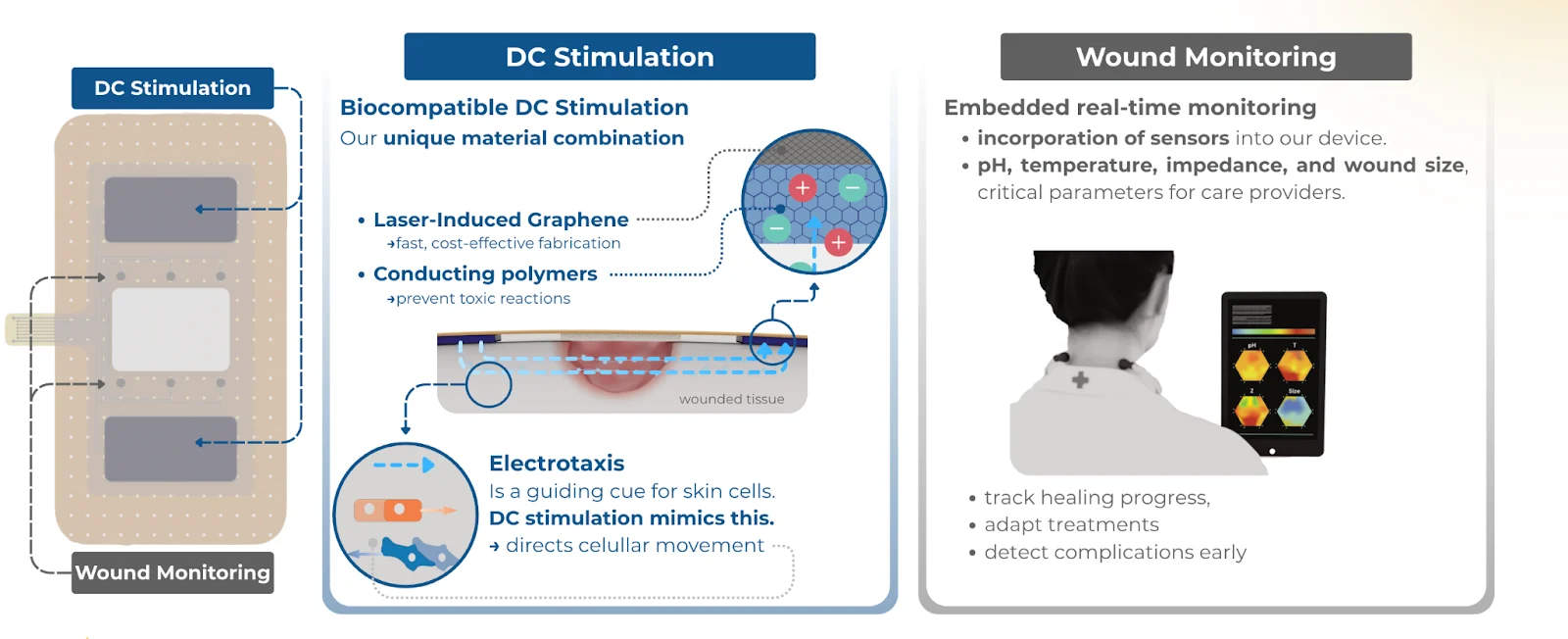
Every living tissue communicates electrically. When skin is injured, a natural electric field appears at the wound edge and guides cells to migrate, proliferate, and rebuild tissue—a phenomenon known as electrotaxis. In many chronic wounds this endogenous signal weakens over time, and repair can stall. By re-introducing a controlled electrical cue, we aim to support the body’s own healing processes rather than replace them.
What History Taught Us
Why Past Approaches Fell Short
Electrical stimulation for wound care has been explored for decades. Many systems use alternating current (AC) or pulsed waveforms, which are generally straightforward to deliver but may be less effective for directing cell movement. Direct current (DC) can provide a directional cue aligned with electrotaxis, yet if it is not carefully controlled it may alter local pH or irritate tissue. The challenge has been delivering the potential benefits of DC while protecting the wound environment. Until now, no one has managed to deliver the benefits of DC safely and effectively.
Click to view in fullscreen
Click to view in fullscreen
Our Breakthrough
Harnessing Direct Current — Safely and Precisely
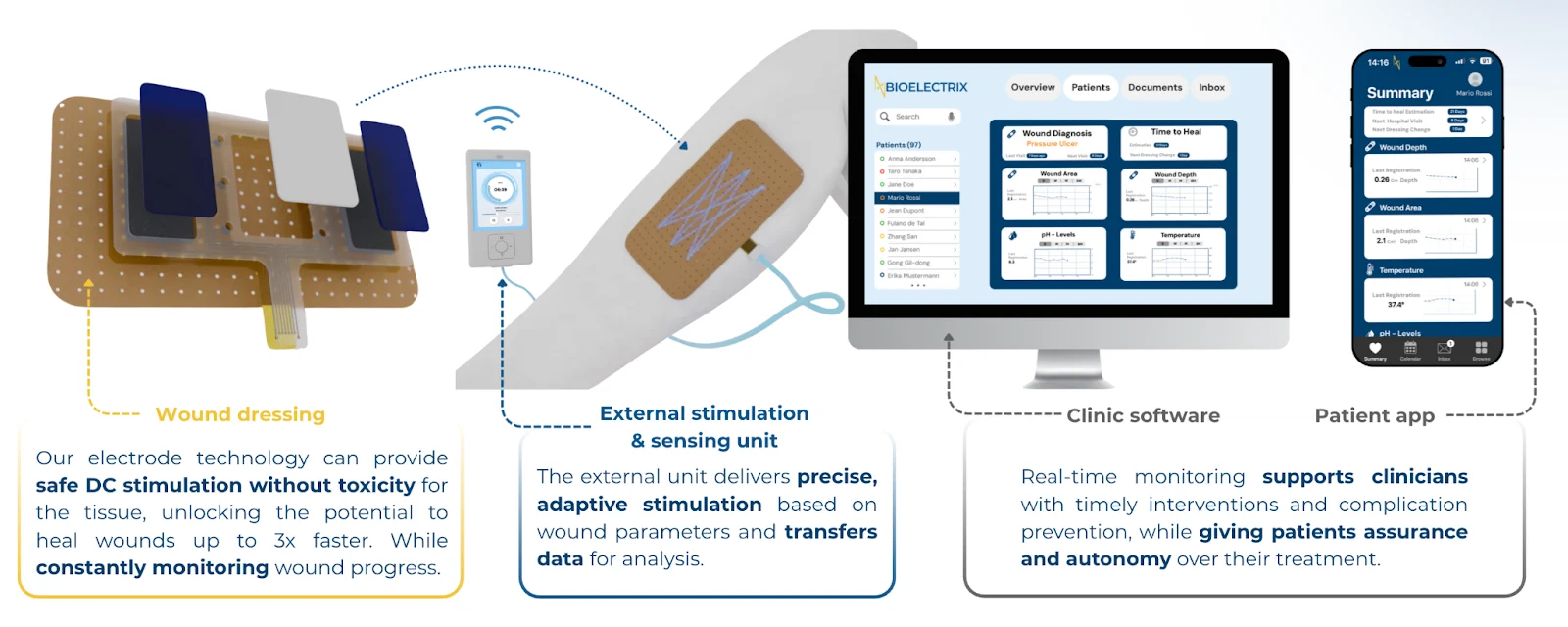
Bioelectrix uses a patent-pending electrode design to deliver carefully regulated direct current intended to mimic the body’s natural fields while maintaining a favorable wound environment. The system continuously limits and stabilizes current at the interface and is designed with materials chosen for biocompatibility. Our goal is precise stimulation that supports electrotaxis without compromising tissue.
How Bioelectrix Works
1. Application
A sterile single-use dressing is applied like an advanced wound dressing.
When connected to a compact electronics module assigned to the same patient for the treatment period, the system delivers gentle DC stimulation and continuously monitors wound-relevant signals such as impedance and moisture.
The dressing is replaced on a standard schedule; the patient’s electronics module is reattached. Each product package includes multiple dressings to support routine changes without added complexity.
The Result
Accelerated, measurable, and personalized healing.
Step-By-Step
[VIDEO]
Regulatory disclaimer
Investigational device. Not for clinical use. Bioelectrix technology is under development and has not been cleared or approved by regulatory authorities.
A Global Healthcare Burden
Chronic wounds — a silent pandemic
Chronic wounds rarely make headlines, yet they affect large numbers of patients and families every year. These wounds can persist for months, recurring or refusing to close, and they quietly absorb clinical time and attention. For the people living with them, everyday activities become complicated by pain, dressings, and uncertainty about what’s happening beneath the surface.
Limits of Current Practice
Care is reactive — not data-driven
Clinicians must decide based on surface inspection and intermittent checks. Current solutions manage symptoms but rarely address the biological cause of delayed healing. Wound assessments occur only at intervals, risking missed changes. Without objective, continuous information from inside the wound, interventions often come too late.
Why It Matters
High human & economic cost
The burden is personal and systemic. Patients face pain, infection risk, and reduced mobility; caregivers and clinicians manage complex routines; health systems carry repeat visits, longer care episodes, and material waste. Together these pressures create significant costs, both human- and financial costs, that motivate better ways to track progress and support healing earlier.
Proof in Progress
Evidence so far
Our work builds on a strong scientific foundation in bioelectronics and electrotaxis from our founding team and collaborators. In pre-clinical in-vitro studies, stimulation under our conditions has shown 3× faster cell migration, a promising signal we are now expanding through further research. In parallel, peer-reviewed publications from the team provide additional context on materials, interfaces, and mechanisms.